When I first started researching the difference between traditional and functional training for older beginners, I felt completely lost. Every fitness article seemed written for twenty-somethings who already knew their way around a gym. I was 52, hadn’t exercised seriously in years, and just wanted to move without my back screaming at me. After spending the past two years trying both approaches, I finally have opinions worth sharing. Strong ones.
What Traditional Training Actually Looks Like
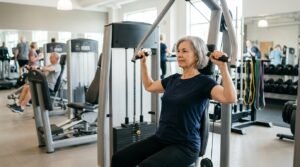
Traditional training follows the classic gym setup most of us picture when we think about working out. You sit on a machine, push or pull a weight in one fixed direction, and repeat. Think leg press machines, bicep curls with dumbbells, chest press stations, and seated rows.
The structure is usually built around isolating specific muscle groups. Monday is chest and triceps. Wednesday is back and biceps. Friday is legs. You track your weights, add more over time, and progress in a very linear way. Bodybuilders have used this approach for decades, and it works extremely well for building visible muscle.
When I first joined a gym at 52, this is exactly what the trainer put me on. Machines felt safe. The movements were simple. I could figure out most equipment just by reading the little instructional sticker on the side. There was something satisfying about adding five more pounds each week and watching my numbers climb.
What Functional Training Actually Looks Like
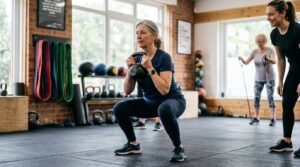
Functional training takes a completely different philosophy. Instead of isolating one muscle at a time, you perform movements that mimic real life. Squatting down to pick something up. Reaching overhead to grab something from a shelf. Rotating your torso to look behind you while carrying groceries.
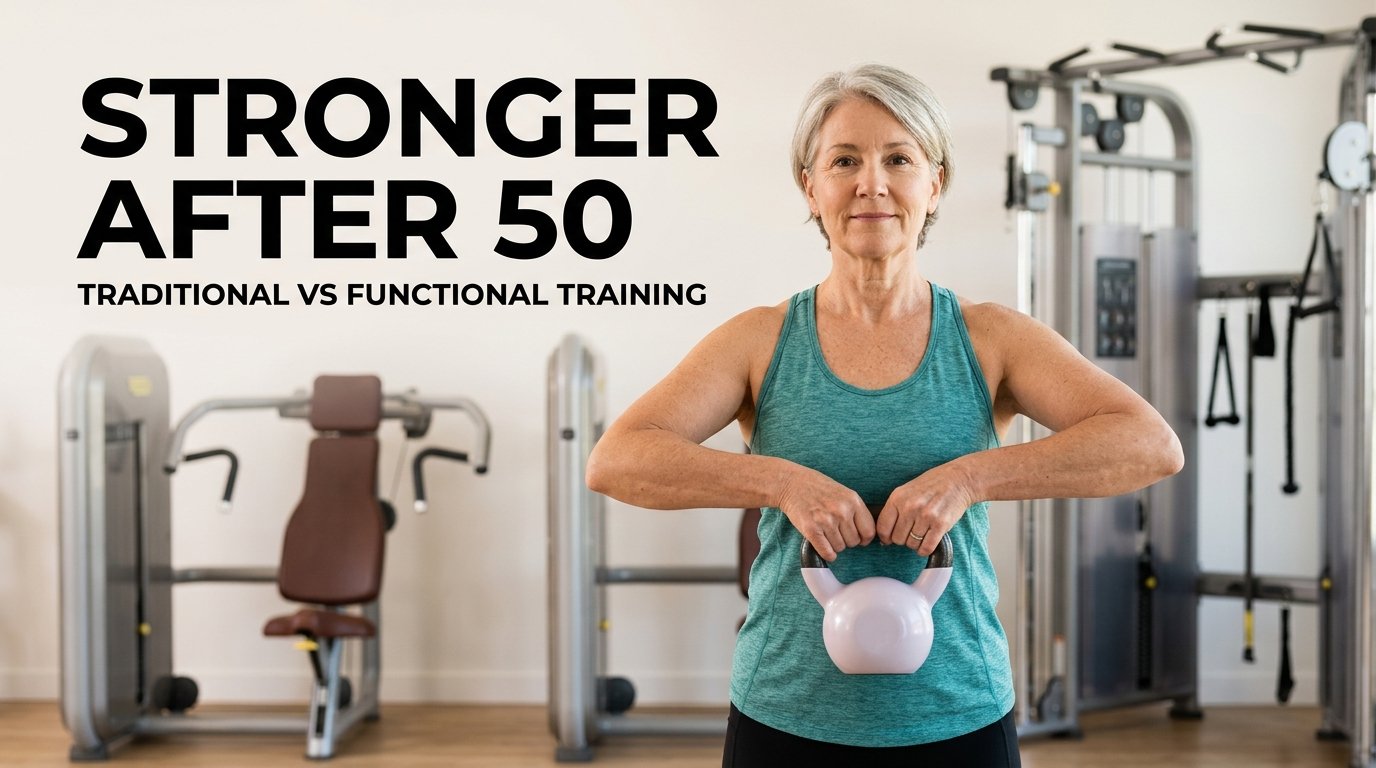
Programs like those from TRX, CrossFit scaled classes, or platforms like Functional Aging Institute specifically design exercises around daily movement patterns. You might do a goblet squat holding a kettlebell, a farmer’s carry across the gym floor, or a step-up onto a box while pressing a light dumbbell overhead.
The equipment is simpler too. Resistance bands, medicine balls, kettlebells, your own body weight. Nothing fancy. I started doing functional work at a small studio near my house after about eight months of traditional training, and the contrast hit me immediately. Everything felt harder in a different way, not because the weights were heavier, but because my body had to coordinate multiple things at once.
The Difference Between Traditional and Functional Training for Older Beginners Comes Down to Purpose
Here’s where I need to be honest about what I learned the hard way. The real difference between traditional and functional training for older beginners isn’t about which one is “better.” It’s about what you’re training for.
Traditional training builds strength in isolated patterns. You will absolutely get stronger legs from a leg press machine. But that strength doesn’t always translate to real-world stability. I could leg press 200 pounds after six months, yet I still wobbled when I tried to stand on one foot to put on my shoes.
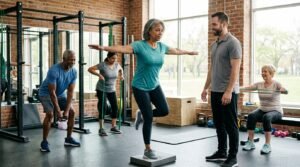
Functional training builds coordination, balance, and multi-joint strength that directly applies to your daily life. After just six weeks of functional work, I noticed I could carry all my grocery bags in one trip without feeling off-balance. Getting up from the floor stopped being a production. Those small wins meant more to me at 52 than any number on a machine ever did.

Safety Considerations for Older Beginners
Machines in a traditional gym do offer one genuine advantage for older beginners: they control your range of motion. When your joints are stiff, your balance is shaky, and you have no muscle memory for exercise, a guided machine reduces injury risk. My physical therapist actually recommended starting on machines specifically because I had a cranky rotator cuff.
Functional training carries slightly more injury risk if you jump in without guidance. Free-standing squats, lunges, and rotational movements require a baseline level of body awareness. I watched a guy around my age try to do a Turkish get-up in his first week of functional class and tweak his shoulder. A good coach makes all the difference here.
My recommendation? Start with machines for the first two to three months. Build a basic strength foundation. Then gradually introduce functional movements with a qualified trainer who understands aging bodies. The American Council on Exercise has a specific senior fitness certification, so look for trainers with that credential.
Joint Health and Recovery Time
Nobody warned me about this part. Traditional training, especially on machines, can actually aggravate joint issues if you’re not careful. The fixed movement paths on machines don’t account for your body’s unique mechanics. My left knee tracks slightly inward, and the leg extension machine made that worse before I figured out what was happening.
Functional training tends to be gentler on joints because movements are more natural and allow your body to find its own path. A bodyweight squat lets your knees, hips, and ankles all adjust together. A squat machine forces one fixed track regardless of your anatomy.
Recovery time also differed for me. After heavy machine sessions, I needed two full days before that muscle group felt ready again. After functional sessions, I felt sore in a more spread-out way, like a full-body tiredness rather than one screaming muscle. I could typically do functional workouts three to four times per week without issues. Traditional heavy lifting needed more spacing.
Social and Mental Aspects
This might sound like a soft point, but it mattered more than I expected. Traditional gym training can feel isolating. You sit on a machine, do your reps, stare at your phone between sets, and move to the next station. I spent six months training this way and barely spoke to another person beyond “are you using this?”
Functional training classes, on the other hand, built a genuine community for me. Small group sessions at my local studio meant I saw the same eight to ten people three times a week. We spotted each other, laughed at our wobbly balance, and celebrated small victories. At an age where social connections actually affect your health outcomes (research backs this up), this benefit shouldn’t be dismissed.
I also found functional training more mentally engaging. Traditional training is repetitive by design. Three sets of twelve. Rest. Repeat. Functional circuits constantly change, which kept my brain active and my boredom low.
Cost Comparison
Let me break this down practically because nobody talks about it enough.
A standard gym membership at a place like Planet Fitness or LA Fitness runs $10 to $50 per month. That gets you access to all the machines you need for traditional training. Very affordable.
Functional training studios or small group classes cost more. I pay $150 per month for three classes per week at my studio. Some CrossFit boxes charge $175 to $250 monthly. You can also do functional training at home with minimal equipment. A set of resistance bands ($15 to $30), a kettlebell ($30 to $50), and a yoga mat ($20) will get you started. YouTube channels like HASfit offer free functional workouts specifically designed for older adults.
FYI, many Medicare Advantage plans cover gym memberships through the SilverSneakers or Silver&Fit programs. Check yours before spending anything.
Which Approach Gets Better Long-Term Results?
After two years of personal experience and way too many hours reading studies from the Journal of Aging and Physical Activity, here’s my take. For older beginners specifically, a blended approach wins.
Purely traditional training will make you stronger on machines but may leave gaps in your balance, coordination, and mobility. Purely functional training builds incredible real-world capability but might not build raw strength as efficiently, especially in your legs and back.
I currently split my week into two functional sessions and one traditional strength session. The traditional day focuses on compound lifts like goblet squats, dumbbell bench press, and cable rows (not isolation machines anymore). The functional days cover movement patterns, balance work, and cardiovascular conditioning. This split has kept me injury-free and feeling better than I did at 45.
How to Choose Your Starting Point
If you haven’t exercised in years and you’re over 50, start with a traditional approach on basic machines for eight to twelve weeks. Build a strength base. Get comfortable in a gym environment. Learn what your body can handle.
Then, find a functional training class or trainer who works with older adults. Transition gradually. Keep one or two traditional lifts in your routine for raw strength maintenance, and build the rest of your program around functional movements.
If you’re already somewhat active, maybe you walk regularly or do yoga, you might jump straight into a beginner functional class. Just make sure the instructor knows your limitations and any joint issues you carry.
Frequently Asked Questions
Is functional training safe for seniors with arthritis?
Generally yes, and many physical therapists actually prefer functional movements for arthritis management. The natural movement patterns reduce joint stress compared to fixed machines. Start with bodyweight only and progress slowly. Always get clearance from your doctor first, and work with a trainer who has experience with arthritic clients.
Can I build muscle with functional training after 50?
Absolutely. Functional training with progressive resistance, like heavier kettlebells or stronger bands, stimulates muscle growth just like traditional lifting. The stimulus is different but effective. Studies show older adults gain muscle from both approaches when protein intake stays adequate, around 0.7 to 1 gram per pound of body weight daily.
What’s the biggest difference between traditional and functional training for older beginners just starting out?
The biggest practical difference is how the strength transfers to your daily life. Traditional training builds muscle in isolated patterns. Functional training builds the coordination between muscles that you actually use when climbing stairs, carrying bags, or catching yourself from a stumble. Both build strength, but functional strength feels more immediately useful.
How many days per week should an older beginner train?
Two to three days works great when you’re starting out. IMO, three is the sweet spot once you’ve been consistent for a month or two. Always keep at least one rest day between sessions if you’re doing full-body work. Your recovery matters more at 50 than it did at 30, so respect it.
Do I need a personal trainer for either approach?
For traditional machine training, you can probably manage after one or two orientation sessions. Machines guide your movement, so the learning curve is short. For functional training, I strongly recommend working with a trainer for at least the first month. Proper form on free-standing movements matters a lot more, especially when balance is a factor.
Conclusion
Choosing between traditional and functional training doesn’t have to be an all-or-nothing decision, and honestly, the best results I’ve seen come from blending both. Your body at 50-plus deserves a program that makes daily life easier, not just one that makes gym numbers go up. So which approach are you leaning toward trying first?