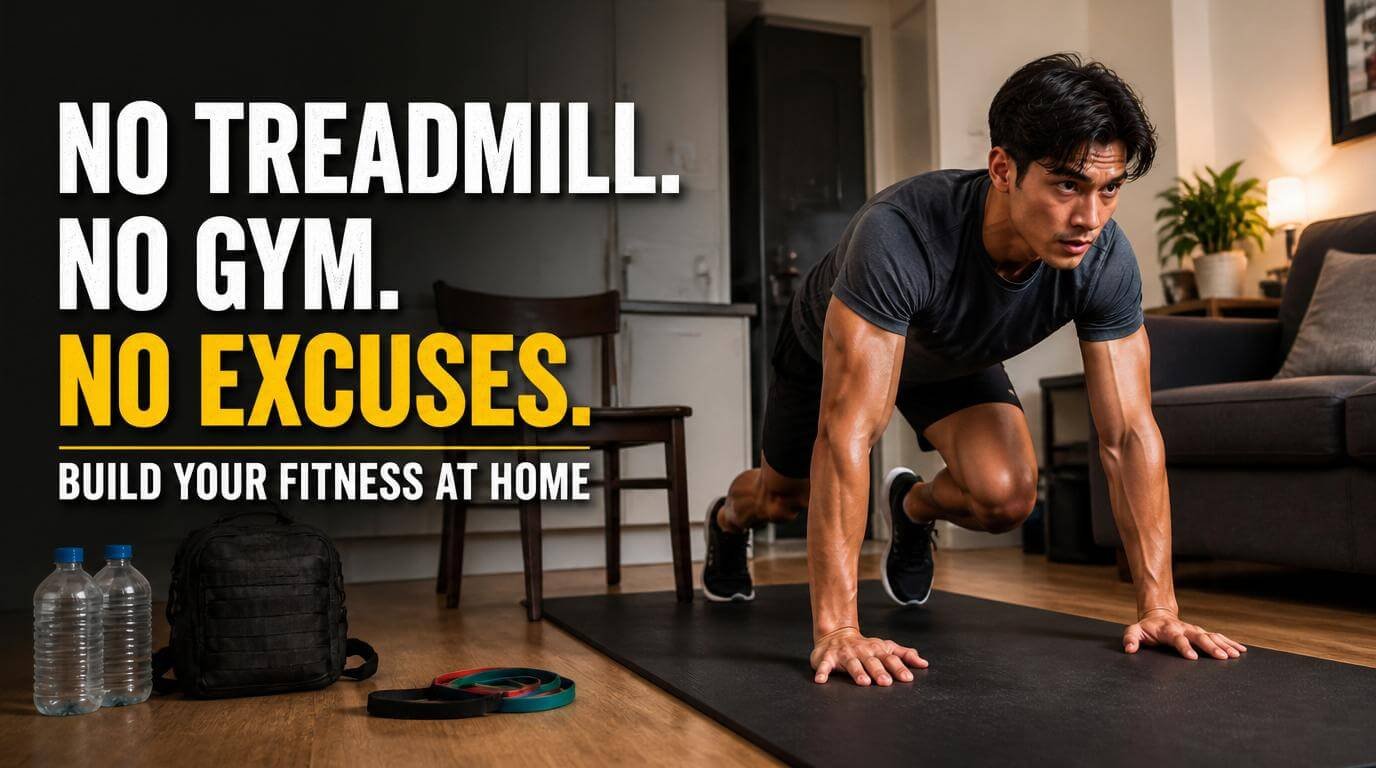
Building solid fitness routines without access to a treadmill or outdoor space sounds limiting until you realize your body is the most versatile piece of equipment you own. I spent an entire winter in a 500-square-foot apartment with no gym membership, no backyard, and zero cardio machines. Honestly? I got into the best shape of my life. The constraints forced creativity, and creativity kept things fun. Here is exactly how I did it, step by step.
Assess What You Actually Have to Work With
Before you start Googling random YouTube workouts, take five minutes and look around your space. Seriously. Measure the open floor area you can claim. For me, it was a 6-by-4-foot patch between my couch and coffee table. That was enough.
You do not need a spare bedroom or a garage. You need enough room to lie flat and extend your arms. If you can do a burpee without hitting a lamp, you have enough space. I moved my coffee table against the wall every morning and slid it back after my session. Took 30 seconds each way.
Grab anything that could serve as equipment. A filled backpack works as a weighted vest. Two gallon jugs of water are roughly 8 pounds each. A sturdy chair becomes a platform for step-ups, tricep dips, and incline push-ups. A towel on a smooth floor turns into a slider for hamstring curls and mountain climbers. You probably already own more “equipment” than you think.
Build a Weekly Structure That Doesn’t Burn You Out
The biggest mistake people make with home workouts is going hard every single day for a week, then quitting entirely. I did this twice before I figured out a rhythm that stuck. Three to four sessions per week is the sweet spot for most people training at home without machines.
Here is the split I landed on and used for months:
- Monday: Upper body strength (push-ups, backpack rows, pike presses)
- Wednesday: Lower body strength (squats, lunges, single-leg deadlifts, wall sits)
- Friday: Full-body cardio circuit (high knees, jump squats, burpees, plank jacks)
- Saturday (optional): Mobility and core work (yoga flow, dead bugs, planks)
Rest days are not lazy days. They are recovery days. Your muscles rebuild during rest, and skipping it just leads to burnout or nagging joint pain. I learned this the hard way after developing a cranky left knee from doing jump squats six days straight.
Cardio Without a Treadmill Is Totally Possible
This is the part most people get stuck on. They assume cardio requires running, and running requires either a treadmill or a sidewalk. Not true. Some of the most intense cardio sessions I have ever done happened in my living room with zero equipment.
High knees for 30 seconds will spike your heart rate faster than a light jog. Pair them with burpees and jumping jacks in a circuit format, and you are looking at a legitimate cardiovascular workout. I used a simple structure: 30 seconds of work, 15 seconds of rest, five exercises, four rounds. The whole thing took about 20 minutes and left me drenched.
If jumping is off the table because of neighbors below you or joint issues, try low-impact swaps. March in place with exaggerated arm swings. Do standing oblique crunches at a fast tempo. Squat to a fast pace. You can absolutely get your heart rate into the 130-to-150 range without your feet ever leaving the floor. I tracked mine with a Fitbit Charge 5, and the numbers backed it up.
Fitness Routines Without Access to a Treadmill or Outdoor Space for Strength Training
Bodyweight strength training gets underestimated constantly. People assume you need barbells and plates to build muscle. But progressive overload works with body weight too, you just have to be creative about it.
Take push-ups. A regular push-up feels easy after a few weeks? Elevate your feet on a chair. Still easy? Slow the tempo to four seconds down, two seconds up. Still too easy? Add a pause at the bottom. Now try doing that with a loaded backpack on. My “home chest day” eventually included deficit push-ups with a 25-pound backpack, and let me tell you, my chest was sore the next morning.
For legs, nothing humbles you faster than a Bulgarian split squat with your back foot on the couch. Add a two-second pause at the bottom and hold those water jugs, and you are dealing with serious muscular tension. Single-leg Romanian deadlifts holding a heavy backpack improved my balance and hammered my hamstrings in ways that even gym machines never did.
The principle is simple: make the movement harder before adding weight. Change the angle, slow the tempo, pause at the hardest point, reduce your base of support. These variables give you months of progression without buying a single piece of equipment.
Use Free Apps and Programs That Actually Deliver
I cycled through a bunch of apps during my indoor training phase, and a few stood out. Nike Training Club offers a solid library of bodyweight workouts organized by muscle group and difficulty. It is completely free and does not push premium features at you every five seconds.
FitOn is another good one, especially for guided video sessions. Having a coach on screen counting reps and keeping the pace helped on days when motivation was low. For yoga and mobility, I kept going back to Yoga With Adriene on YouTube. Her 30-day programs gave me structure on recovery days.
One thing I learned: avoid program-hopping. Pick one app or one routine and stick with it for at least four to six weeks. You will not see results if you switch programs every Monday. Consistency beats novelty every single time.
Keep It Short and Keep It Honest
Nobody needs a 90-minute home workout. I tried that once and ended up just scrolling my phone between sets for half the time. Twenty to thirty minutes of focused, intentional movement beats an hour of distracted nonsense.
Set a timer. I used the Tabata Timer app for interval work and a simple stopwatch for strength circuits. When the clock is running, you work. When it buzzes, you stop. This kept my sessions tight and productive.
Also, track your workouts. I used a plain notebook, nothing fancy. I wrote the date, the exercises, the reps, and any notes like “felt easy” or “grip gave out on set 3.” Looking back through those pages after two months showed me exactly how much I had progressed, and that visual proof kept me going on days when I wanted to skip.
Handle the Mental Side of Training Indoors
Working out in a small space without fresh air or a change of scenery gets mentally stale. I will not sugarcoat that. Around week three, I started dreading my sessions. The walls felt like they were closing in.
What helped was changing small variables. I trained in different corners of the apartment. I switched up my playlist every week. I opened a window for airflow, even when it was cold outside. Sometimes I wore headphones and did my workout to a podcast instead of music. Those tiny shifts kept the routine from feeling like a chore.
Another trick: I paired my workout with something I looked forward to. Immediately after training, I made a really good coffee. That post-workout ritual became the reward my brain latched onto, and it made starting the session way easier because I knew something enjoyable was waiting on the other side.
Scale It Up Over Time Without Buying a Gym
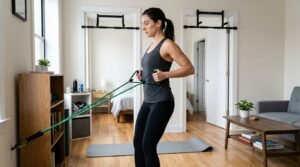
After about two months of pure bodyweight training, I invested in two pieces of equipment that opened up a huge range of new exercises: a set of resistance bands (I bought the Fit Simplify set for around $12) and a doorframe pull-up bar (the Iron Gym brand, about $25).
The resistance bands added variable tension to squats, glute bridges, lateral walks, and even chest presses when anchored to a door. The pull-up bar gave me access to pull-ups, chin-ups, and hanging knee raises, which completely changed my back and core training.
Those two purchases, totaling under $40, gave me enough variety to keep progressing for another four months. You do not need a full home gym. You need a couple of smart additions at the right time.
FAQs
Can you really get fit with fitness routines without access to a treadmill or outdoor space?
Absolutely. I did it for over six months and saw real, measurable progress in strength, endurance, and body composition. Bodyweight exercises, cardio circuits, and progressive overload principles work regardless of location. Your body does not care whether resistance comes from a barbell or gravity. Consistency and effort matter far more than the setting.
How do I do cardio indoors without bothering my downstairs neighbors?
Stick to low-impact movements. Fast-paced marching, squat pulses, standing bicycle crunches, and lateral shuffles all get your heart rate up without pounding the floor. A thick exercise mat or even a folded blanket under your feet absorbs some vibration too. I lived in an upstairs apartment and never got a single complaint using this approach.
What is the minimum equipment I need to work out at home?
Technically, nothing. Your body weight provides enough resistance for dozens of exercises. If you want to expand after a few weeks, a set of resistance bands and a doorframe pull-up bar cover almost every muscle group for under $40 total. A yoga mat is nice for comfort but not essential.
How long should a home workout session last?
Twenty to thirty minutes is plenty if you stay focused and minimize rest between sets. Interval circuits and timed sets keep things efficient. I found that shorter, intense sessions gave me better results than long, unfocused ones. Quality over quantity always wins when training at home.
How do I stay motivated working out in the same small space every day?
Switch up small details regularly. Change your music, rearrange the room, try a new exercise variation, or pair your workout with a reward like a great cup of coffee afterward. Tracking your progress in a notebook also helps because seeing improvement on paper gives you a reason to keep showing up.
Conclusion
Fitness does not require a gym membership, a treadmill, or even a backyard. Some of my most consistent training happened in a cramped apartment with nothing but a backpack full of books and a stubborn refusal to skip a session. What is the one bodyweight exercise you keep coming back to when all else fails?