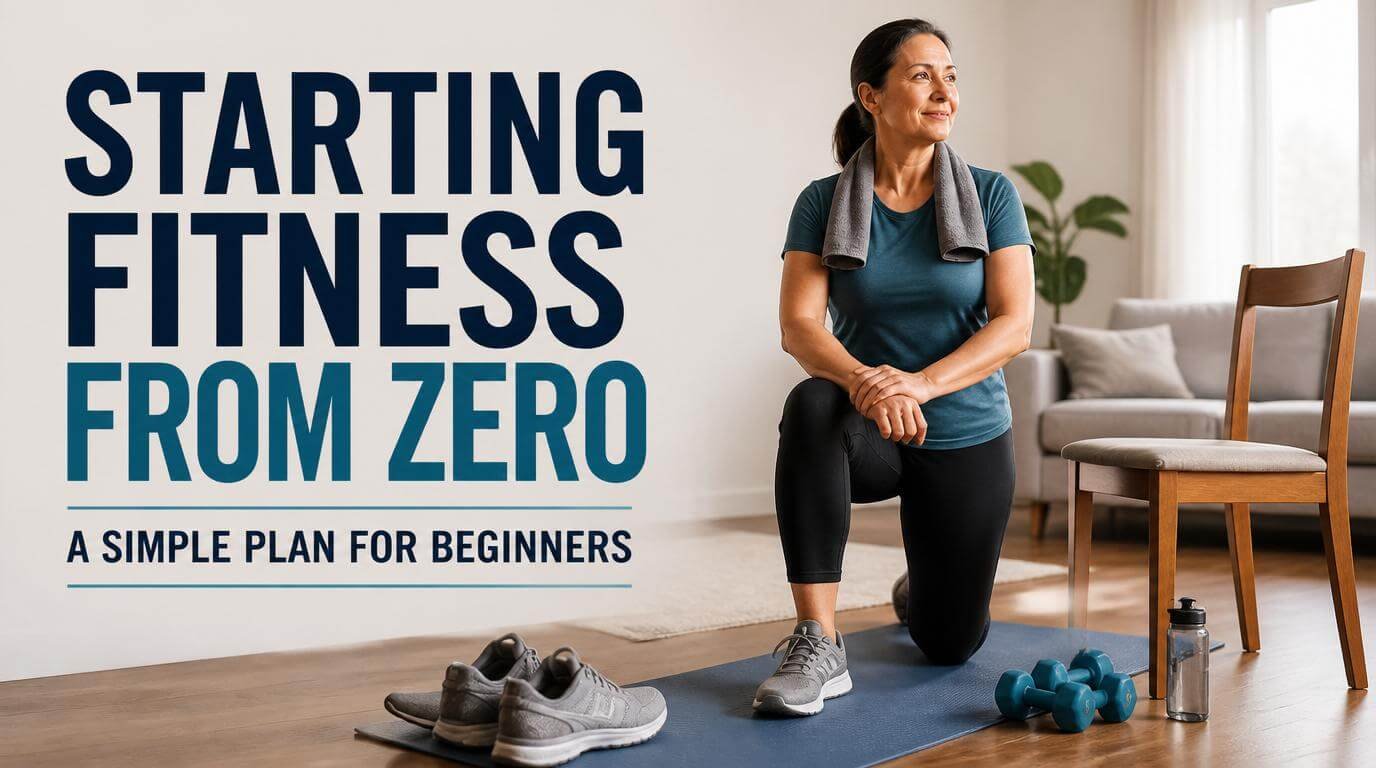
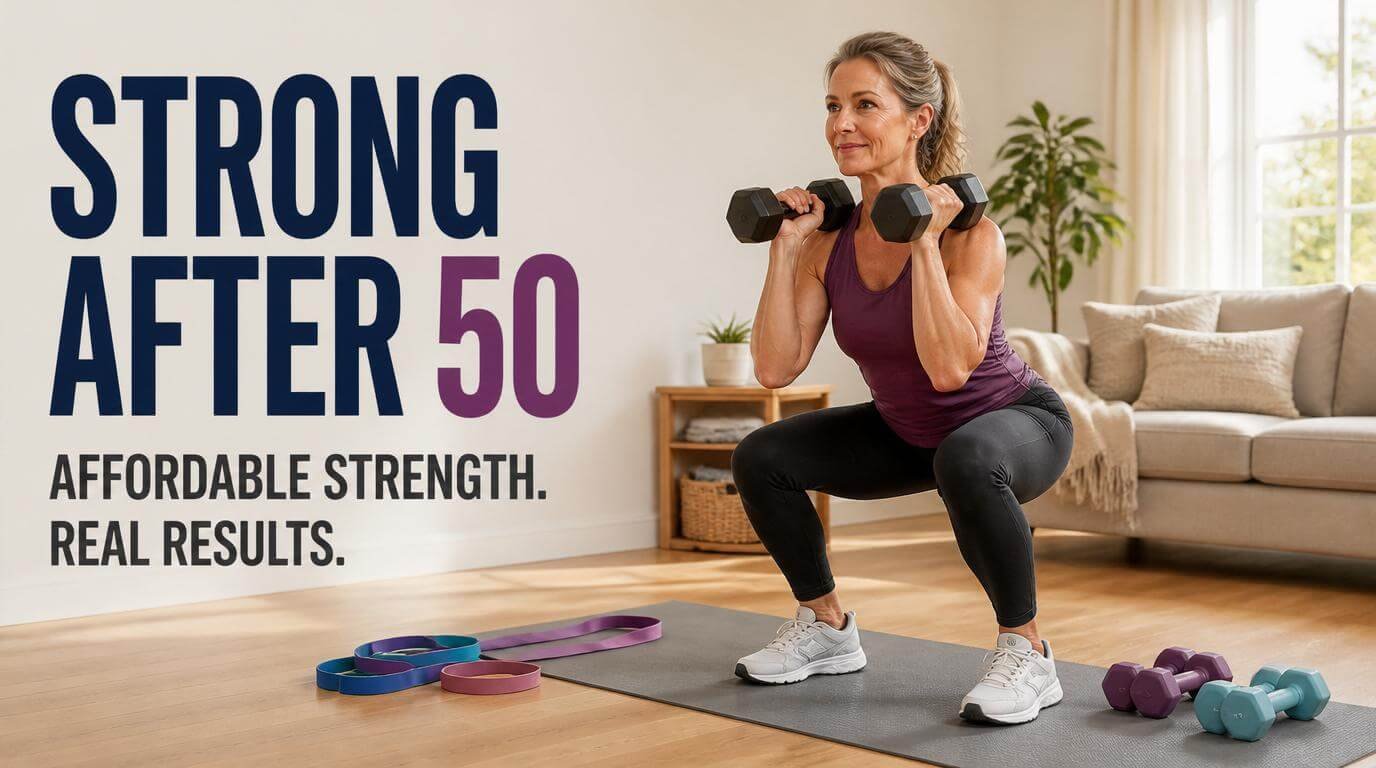
When I first searched for affordable strength training routines for women over fifty starting out, I expected to find simple answers. Instead, I found expensive gym memberships, confusing programs, and trainers who clearly had never dealt with a creaky knee at 6 AM. So I built my own plan. I spent under $60 total, trained in my living room three days a week, and within four months I felt stronger than I had in my entire forties. This guide is everything I wish someone had handed me on day one.
Why Strength Training After 50 Is Non-Negotiable
After 30, women lose roughly 3 to 8 percent of muscle mass per decade. After 50, that rate accelerates. Bone density drops. Balance gets shaky. The stuff nobody warns you about, like struggling to open a jar or feeling unsteady on stairs, starts creeping in.
Strength training directly fights all of that. It builds muscle, increases bone density, improves balance, and boosts metabolism. The American College of Sports Medicine recommends resistance training at least two days per week for older adults, and the benefits show up fast. I noticed improved grip strength and better sleep within the first three weeks.
The best part? You don’t need a fancy gym. You don’t need a $200-a-month personal trainer. You need consistency, a few basic tools, and a plan that respects where your body is right now.
Getting the Right Affordable Equipment
You can start strength training with literally nothing. Bodyweight exercises alone will challenge you for weeks. But a small investment goes a long way, and I’m talking under $60 for everything.
Here’s what I bought and still use daily:
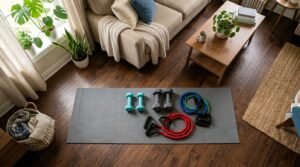
- A set of resistance bands with handles (around $15 on Amazon)
- Two pairs of dumbbells, 5-pound and 10-pound (roughly $25 total from Walmart)
- A basic yoga mat for floor work ($10 to $15)
That’s it. No bench, no barbell, no squat rack. Brands like Fit Simplify for bands and CAP Barbell for dumbbells are solid and budget-friendly. I’ve had mine for over two years now and they still work perfectly. Skip the adjustable dumbbell sets for now. They’re nice but unnecessary when you’re just getting started. You can always upgrade later once you know what weight range you actually need.
Affordable Strength Training Routines for Women Over Fifty Starting Out: The Weekly Plan
This is the exact three-day plan I followed during my first two months. Each session takes about 30 to 40 minutes. I trained Monday, Wednesday, and Friday, with rest days in between.
Day 1: Lower Body Focus
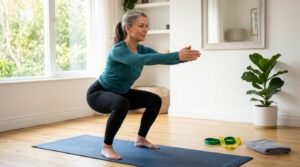
Bodyweight squats are your best friend here. Stand with feet shoulder-width apart, lower yourself like you’re sitting into a chair, then push back up. Start with 3 sets of 10. If full squats feel rough on your knees, only go halfway down.
Follow that with stationary lunges, 3 sets of 8 per leg. Then glute bridges on the mat, 3 sets of 12. Finish with banded side steps, 2 sets of 15 steps each direction. The whole thing takes about 30 minutes, and your legs will absolutely remind you the next day.
Day 2: Upper Body Focus
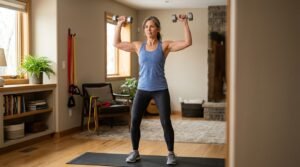
Grab your 5-pound dumbbells. Start with overhead presses, 3 sets of 10. Then do bent-over rows, 3 sets of 10 each arm, bracing your free hand on a sturdy chair for support.
Next, resistance band chest presses, looping the band behind your back and pressing forward. Three sets of 12. Finish with bicep curls, 3 sets of 10 with the dumbbells. I’ll be honest, my arms were shaking after the first session. By week three, they weren’t. Progress is real and it’s fast at this stage.
Day 3: Full Body and Core
This day mixes everything together. Start with 3 sets of 10 sumo squats holding a single dumbbell. Move to push-ups, and there’s zero shame in doing them against a wall or on your knees. Three sets of as many as you can do with good form.
Then hit the floor for dead bugs, 3 sets of 10 per side. These are incredible for core stability without destroying your lower back like crunches can. Wrap up with a 30-second plank hold, working up to 45 seconds over time. Rest as much as you need between sets. This isn’t a race.
How to Warm Up Without Wasting Time
Skipping warmups after 50 is basically asking for trouble. I learned this the hard way when I pulled a muscle in my upper back during week two because I jumped straight into rows.
Now I spend 5 to 7 minutes warming up before every session. My routine is simple: 2 minutes of marching in place to get my heart rate up, arm circles forward and backward for 30 seconds each direction, 10 slow bodyweight squats, and some gentle torso twists. Nothing fancy, nothing that requires a tutorial. Just enough to get blood flowing to the muscles you’re about to use.
If your joints feel especially stiff on a given day, add a minute or two of gentle stretching. But save the deep static stretches for after your workout, not before. Research from the Journal of Strength and Conditioning confirms that dynamic warmups before training improve performance, while static stretching beforehand can actually reduce power output.
Progression: When and How to Make It Harder
Staying at the same weight and reps forever won’t do much after the first month. Your muscles adapt. You need to give them a reason to keep growing. But progression after 50 looks different than it does for someone in their twenties.
Here’s my simple rule: when you can complete all sets and reps with good form and the last two reps don’t feel challenging, it’s time to progress. You have three options. Add 2 to 5 more pounds. Add 2 more reps per set. Or add one more set.
Only change one variable at a time. I made the mistake of jumping from 5-pound to 15-pound dumbbells on overhead presses because I felt strong. My shoulder disagreed loudly. Small jumps keep you safe and still moving forward.
Most women I’ve talked to who follow affordable strength training routines for women over fifty starting out hit their first real plateau around month three. That’s normal. Swap in a new exercise, change the order of your routine, or add a fourth training day. Small tweaks restart progress.
Free Resources That Actually Help
You don’t need to pay for a program. Some of the best guidance I’ve found is completely free.
YouTube channels like Caroline Girvan, HASfit, and Growing Bolder have excellent strength workouts tailored for beginners and older adults. HASfit in particular has a “Senior Fitness” playlist that’s surprisingly challenging without being reckless.
The CDC’s “Growing Stronger” program is a free PDF-based strength training guide specifically designed for older adults. It walks you through every exercise with illustrations and safety notes. I printed the whole thing and kept it on my kitchen counter for the first month.
Local libraries often carry books like “Strength Training Past 50” by Wayne Westcott and Thomas Baechle. I checked mine out three times before finally buying a used copy for $6 on ThriftBooks. If you prefer apps, the free version of JEFIT lets you log your workouts and track progress without paying a cent.
Common Mistakes I Made (So You Don’t Have To)
I went in overconfident and paid for it with a sore back and bruised ego. Here’s what I’d do differently.
First, I didn’t prioritize form. I was so focused on getting through the reps that my squats looked more like wobbly curtsies. Film yourself on your phone. Watch it back. Compare to a good tutorial. It feels silly but it prevents injuries.
Second, I skipped rest days during week three because I was feeling great. By week four, my knees ached and I had zero energy. Recovery is where muscle actually builds. Respect the rest days, especially when your body is adapting to a brand-new stimulus.
Third, I forgot about protein. You can’t build muscle without adequate protein intake. I wasn’t eating enough, and my progress stalled until I bumped up to roughly 0.7 grams of protein per pound of body weight daily. Greek yogurt, eggs, chicken thighs, and canned tuna became my staples. None of those broke the bank.
Staying Motivated When Nobody’s Watching
Here’s the real talk nobody gives you. Working out alone at home, with no trainer and no class schedule, requires a different kind of discipline. Some mornings I stared at my dumbbells for ten minutes before picking them up.
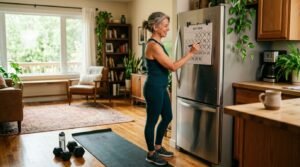
What kept me going was a paper calendar on my fridge. Every workout day I completed, I drew a big red X. After two weeks of unbroken X’s, I didn’t want to break the chain. That visual streak became more motivating than any app notification.
I also found an accountability partner. My neighbor Linda, who’s 55, started the same week I did. We texted each other after every session. Sometimes it was just a thumbs-up emoji. That tiny connection made a huge difference on days when motivation was nonexistent.
Set a specific time and treat it like a doctor’s appointment. I train at 7:15 AM, right after my first cup of coffee. Not “sometime in the morning.” Not “when I feel like it.” A specific time builds a habit faster than willpower ever will.
Frequently Asked Questions
Is strength training safe for women over 50 with joint issues?
Yes, as long as you start light and prioritize form. Low-impact exercises like glute bridges, wall push-ups, and banded movements put minimal stress on joints while still building muscle. If you have a specific condition like arthritis or a prior injury, check with your doctor before starting. Most physicians encourage resistance training for joint health, not against it.
How quickly will I see results from these routines?
Most women notice improved energy and better sleep within the first two weeks. Visible muscle tone usually shows up around week six to eight, depending on consistency and diet. Strength gains come faster than aesthetic changes, so track how much weight you lift and how many reps you complete. Those numbers will climb before the mirror catches up.
Can I follow affordable strength training routines for women over fifty starting out without any equipment at all?
Absolutely. Bodyweight exercises like squats, lunges, push-ups, planks, and glute bridges provide real resistance. You can use filled water bottles or canned goods as light weights too. Equipment helps as you get stronger, but the first several weeks can be entirely equipment-free and still very effective.
How much should I expect to spend if I buy basic equipment?
Between $40 and $60 covers everything you need to get started. A set of resistance bands runs about $15. Two pairs of light dumbbells cost around $25. A yoga mat adds another $10 to $15. All of this lasts for years. Compare that to a gym membership averaging $40 to $50 per month, and the savings are obvious.
What if I can only work out two days a week instead of three?
Two days still produces meaningful results. Focus on full-body sessions each day instead of splitting upper and lower body. Hit squats, push-ups, rows, and core work in every session. The CDC recommends a minimum of two resistance training days per week for health benefits, so you’re still right on target.
Conclusion
Starting strength training after 50 on a tight budget felt intimidating until I actually did it. The barriers were mostly in my head, not in my wallet. If you’ve been putting this off, grab a pair of dumbbells this week and try Day 1. What’s the first exercise that feels the most doable to you right now?