
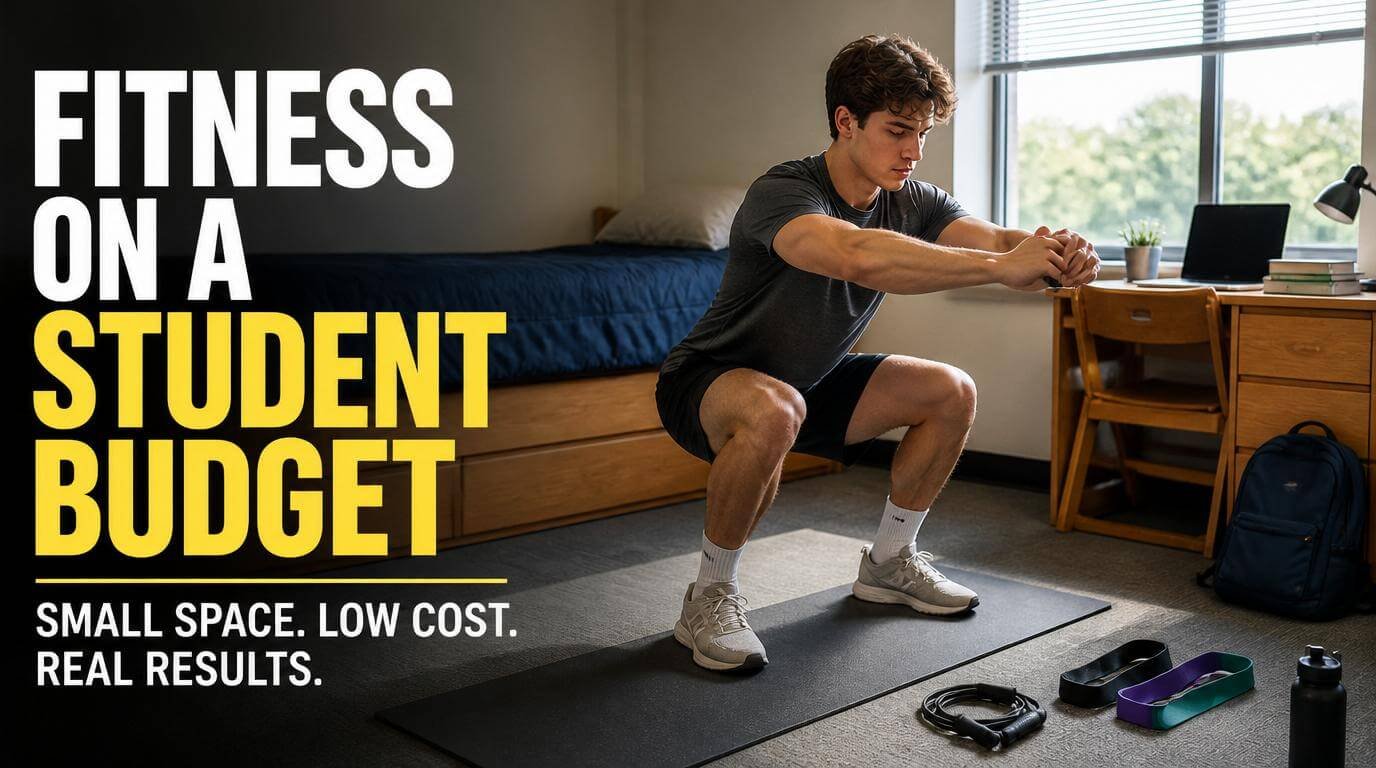
Finding budget friendly fitness plans for college students living in dorms felt impossible my freshman year. I had zero equipment, a roommate three feet away, and maybe $20 left after textbooks. The campus gym was always packed at the times I could actually go. Sound familiar? That frustration pushed me to figure out what actually works when your space, money, and time are all limited. Here’s everything I learned the hard way.
1. Use Your Body Weight Before You Buy Anything
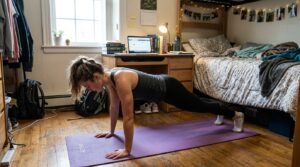
Your own body is the most underrated piece of gym equipment you already own. Push-ups, squats, lunges, planks, and burpees cost absolutely nothing and require about six square feet of floor space. That’s roughly the area between your bed and your desk.
I started with three sets of 10 push-ups and 15 bodyweight squats every morning before class. Within a month, I added variations like diamond push-ups and pistol squats. The progression kept things interesting without spending a dime. Apps like Nike Training Club offer free bodyweight routines sorted by time and difficulty, so you never have to plan your own workout from scratch.
2. Resistance Bands Are Your Best $10 Investment
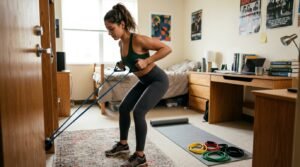
If you’re going to spend any money at all, spend it on a set of resistance bands. A pack of five with different tension levels runs about $10 to $15 on Amazon. They weigh nothing, fit in a drawer, and replicate a surprising number of gym exercises.
I used mine for banded rows, shoulder presses, lateral raises, and even assisted pull-ups on the stairwell railing. They travel well too, so winter break workouts at your parents’ house are covered. Brands like Fit Simplify and WSAKOUE sell solid sets that lasted me two full school years before I had to replace one band.
3. YouTube Is a Free Personal Trainer
Paying for a personal trainer when you can barely afford ramen? Not happening. YouTube channels like Hybrid Calisthenics, THENX, and Blogilates offer structured programs that rival paid coaching. Sydney Cummings posts full-length daily workouts that require minimal or no equipment.
I followed Blogilates’ beginner calendar my sophomore year, and the structure kept me accountable. Each video runs 10 to 30 minutes, perfect for squeezing in between classes. The biggest tip: download videos over your dorm Wi-Fi so you can work out outside without burning through your data plan.
Budget Friendly Fitness Plans for College Students Living in Dorms Start With Routine
Honestly, the hardest part isn’t finding exercises. It’s doing them consistently when your schedule changes every semester. I learned to anchor my workouts to something fixed, like right after my 9 AM class on Mondays, Wednesdays, and Fridays.
Block 30 minutes on your phone calendar and treat it like a class you can’t skip. Missing one session isn’t a failure, but missing three in a row usually means the habit is dying. I also told my roommate my schedule so she knew when I’d be doing floor exercises and wouldn’t walk in during a set of burpees. Communication saves awkwardness.
4. Take Advantage of Campus Facilities You’re Already Paying For
Your tuition likely includes access to the campus recreation center, and most students never use it past the first two weeks of January. Go at off-peak hours. I’m talking 6 AM, mid-afternoon between 1 and 3 PM, or Friday evenings when everyone else is out.
My university also had free fitness classes, including yoga, spinning, and kickboxing, that nobody knew about because they were buried on a random page of the rec center website. Check yours. You’re paying for these services whether you use them or not. Some campuses even offer free sessions with a student trainer during the first week of each semester.
5. Turn Your Dorm Room Into a Mini Gym
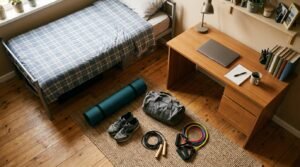
You don’t need a squat rack. A yoga mat ($12 to $20), a jump rope ($6 to $8), and those resistance bands I mentioned earlier give you a legit workout setup that fits under your bed. If you want to level up later, a pull-up bar that hooks over a door frame costs about $25 and works in most standard dorm doorways.
I kept my gear in a small drawstring bag hung on my closet door handle. Everything was visible, which reminded me to actually use it. Out of sight really does mean out of mind when it comes to fitness equipment. One thing to check first: some dorms have rules about door-mounted pull-up bars, so ask your RA before you install one.
6. Meal Prep on a Student Budget to Support Your Training
Working out means nothing if you’re fueling your body with vending machine chips and energy drinks every day. You don’t need fancy supplements. Buy eggs, oatmeal, bananas, peanut butter, rice, canned beans, and frozen vegetables. A week’s worth of protein-packed meals can cost under $30.
I used a mini rice cooker (allowed in my dorm) to make rice, steam vegetables, and even cook oatmeal. Overnight oats in a mason jar take five minutes to prep before bed and give you a solid breakfast without a kitchen. If your dorm has a communal kitchen, batch cook chicken thighs on Sunday for the whole week. They’re cheaper than breasts and taste better, honestly.

7. Find a Free Workout Buddy on Campus
Accountability is the cheapest fitness tool you’ll ever find. Post in your dorm’s group chat or your university’s fitness-related clubs on Instagram or Discord. Odds are someone on your floor is looking for the exact same thing you are.
My workout partner and I met because we both complained about the gym being too crowded in our floor’s WhatsApp group. We started doing bodyweight circuits in the common room lounge at 7 AM before it got busy. Having someone expect you to show up makes skipping way harder. Plus, it’s more fun. We pushed each other on reps and kept a shared Google Sheet to track progress, which sounds nerdy but worked incredibly well.
8. Use Free Apps to Track Progress Without a Gym Membership
Tracking your workouts keeps you motivated and shows you that progress is happening, even when the mirror doesn’t seem to change yet. Strong Workout Tracker has a free tier that lets you log exercises, sets, and reps. JEFIT is another solid option with built-in routines.
I used Strong for about 18 months and the graphs showing my push-up and squat numbers climbing kept me going through midterms and finals when motivation was at rock bottom. Seeing that you went from 10 push-ups to 30 in two months is more motivating than any Instagram fitness influencer’s post. MyFitnessPal also helps if you want to loosely track calories without obsessing over every number.
9. Outdoor Workouts Cost Nothing and Beat Dorm Walls
When the weather cooperates, take your workout outside. Campus quads, tracks, park benches, and staircases are free equipment. Sprint intervals on the track. Step-ups on a bench. Stair runs at the stadium. These all build real strength and cardio without paying for a single class.
I ran stairs at our football stadium twice a week and it was the hardest cardio I’ve ever done, way more intense than any treadmill session. The fresh air also helps with the mental health side of college life, which is something nobody talks about enough when discussing fitness. If your campus has an outdoor pull-up bar station or a calisthenics park, you’ve basically hit the jackpot.
10. Avoid These Common Money Traps
Fitness marketing targets college students hard. You do not need pre-workout supplements, a $50 per month app subscription, overpriced protein powder, or a set of adjustable dumbbells that cost more than your textbooks. Those things are fine later when you have income, but right now they’re unnecessary.
The biggest waste of money I saw was classmates buying semester-long memberships at off-campus gyms they visited twice. If you’re going to pay for a gym, do a month-to-month membership and cancel the second you stop going consistently. Planet Fitness runs $10 per month with no contract, which is a decent fallback if your campus gym truly doesn’t work for your schedule.
FAQs
Can I really get fit with just bodyweight exercises in a dorm room?
Absolutely. Bodyweight training builds real strength, endurance, and muscle when you progressively increase reps, variations, and intensity over time. Plenty of calisthenics athletes built impressive physiques without touching a weight. Start simple, add harder variations as you improve, and stay consistent. You’ll surprise yourself within a few months.
What’s the cheapest equipment worth buying as a college student?
A set of resistance bands (around $10 to $15) gives you the most versatility per dollar. After that, a basic yoga mat and a jump rope round out a complete home gym setup for under $30 total. Everything fits in a backpack and works in any space.
How do I stay motivated with budget friendly fitness plans for college students living in dorms?
Find a workout buddy, track your progress in an app, and tie your workouts to a fixed part of your daily schedule. Motivation fades, but habits stick. Also, give yourself grace during finals week. Taking a few days off won’t erase your progress. Just get back to it once exams are done.
Are campus gym classes really free?
Most universities include recreation center access and group fitness classes in your tuition and fees. Check your school’s rec center website or stop by the front desk. You might find yoga, cycling, Zumba, and strength classes you can attend at no extra cost. Availability varies by school, but it’s always worth checking.
How many days per week should I work out as a busy student?
Three to four days works well for most students balancing classes, studying, and a social life. You don’t need to train every single day. Two strength sessions and one or two cardio sessions per week will keep you progressing. Recovery matters just as much as the workouts themselves.
Conclusion
Getting and staying fit in college doesn’t require a big budget or a fancy gym. It just takes a little creativity, consistency, and the willingness to do push-ups on a questionable dorm room floor. What’s the one thing you’re going to try first?