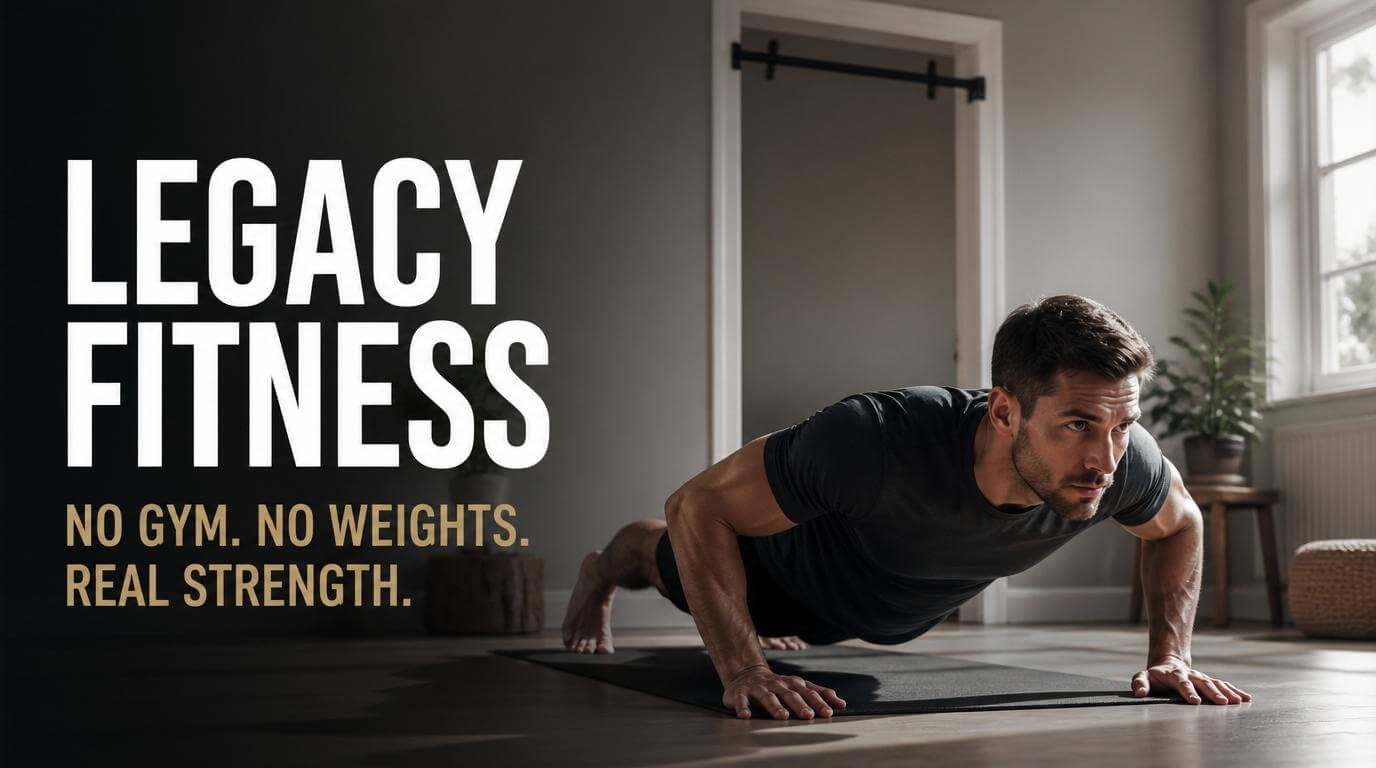
Legacy fitness workouts without any gym equipment or weights changed the way I think about strength training, and I genuinely believe they can do the same for you. I spent three years paying for a gym membership I barely used before I finally admitted the truth: I hate gyms. The fluorescent lighting, the waiting for machines, the guy grunting next to me. So I canceled my membership, cleared a corner of my living room, and started training with nothing but my own bodyweight. That decision was the best fitness choice I ever made.
What “Legacy Fitness” Actually Means and Why It Works
The term “legacy fitness” gets tossed around a lot, but most people use it loosely. At its core, legacy fitness refers to training methods that have stood the test of time, movements humans have performed for centuries before barbells and cable machines existed. Think calisthenics, gymnastic fundamentals, old-school military conditioning, and bodyweight progressions that warriors and athletes relied on long before modern gyms showed up.
These methods work because they train your body as a single connected unit. You’re not isolating your biceps on a preacher curl. You’re pushing, pulling, squatting, hinging, and stabilizing with everything firing together. That builds functional strength you actually feel in daily life, not just in the mirror.
I noticed the difference within two months. Carrying groceries felt easier. My posture improved. My lower back pain, something I’d dealt with for years, started fading. And I hadn’t touched a single weight.
How to Start Legacy Fitness Workouts Without Any Gym Equipment or Weights
Starting from zero can feel overwhelming when you don’t have equipment to guide you. There’s no machine with a little diagram showing which muscles you’re working. But that’s also the beauty of it. You only need your body, a floor, and maybe a door frame.
Here’s how I structured my first week, and what I’d recommend to anyone starting fresh.
Assess Where You Are Right Now
Before you do a single push-up, figure out your honest baseline. Can you hold a plank for 30 seconds? Can you do 5 clean squats without your knees caving inward? Can you hang from a pull-up bar (or a sturdy tree branch) for 10 seconds?
I couldn’t do a single proper push-up when I started. Not one. My arms shook, my hips sagged, and I collapsed. That was humbling, but knowing my starting point helped me build a plan that actually made sense instead of copying some advanced routine off YouTube and burning out in a week.
Pick 5 Foundation Movements
You don’t need 47 exercises. You need five solid ones that cover the basic human movement patterns. Here’s what I started with:
- Push-ups (or knee push-ups if full ones aren’t there yet)
- Bodyweight squats
- Planks
- Glute bridges
- Dead hangs from any overhead bar or ledge
That’s it. These five movements hit your chest, shoulders, triceps, core, quads, glutes, hamstrings, and grip. You’re covering nearly your entire body with zero equipment. I rotated through these three days a week for the first month, and the strength gains genuinely surprised me.
Building a Weekly Routine That Sticks
Consistency matters more than intensity, especially early on. I’ve watched friends go all-in on day one, do some brutal 45-minute bodyweight circuit they found on Instagram, then not work out again for two weeks because their legs are destroyed.
My approach was simpler. Three training days per week, each session about 20 to 25 minutes. Monday was push-focused (push-up variations and planks). Wednesday was lower body (squats, lunges, glute bridges). Friday was a full-body mix. Weekends were for walking or light stretching, nothing structured.
The key is treating your schedule like a non-negotiable appointment. I trained at 6:45 AM every session, right before my morning coffee. After two weeks, it stopped being a decision and became automatic. If you wait until you “feel like it,” you’ll never build the habit.
Progressing Without Adding Weight
This is where legacy fitness gets really interesting. Without a rack of dumbbells to grab heavier ones from, you progress by making movements harder through leverage, tempo, range of motion, and unilateral loading.
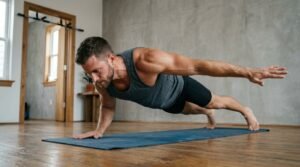
Let me give you a real example. Standard push-ups got easy for me around week six. Instead of adding weight to my back (which would defeat the purpose), I switched to diamond push-ups, bringing my hands close together under my chest. Two weeks later, I moved to decline push-ups with my feet elevated on my couch. After that, archer push-ups. Eventually, I started training toward a one-arm push-up.
Each progression felt like leveling up in a video game. And the strength I built this way felt different from what I’d gotten in a gym. More balanced, more connected.
Tempo Training Is Your Secret Weapon
One trick that completely changed my results: slowing everything down. Instead of banging out 20 fast squats, I did 8 squats with a 4-second descent, a 2-second pause at the bottom, and a controlled 2-second rise. My legs were shaking by rep 5.
Tempo training increases time under tension, which is one of the primary drivers of muscle growth. You don’t need heavier weights when you can make a bodyweight squat feel like you’ve got a barbell on your back. I picked this up from reading about old-time strongman training methods, and it’s been a staple in my routine ever since.
The Exercises That Build Real, Lasting Strength
After a year of training this way, I narrowed my rotation down to the movements that gave me the most return. These are the exercises I still do every single week.
Push-Up Variations
I cycle through standard, diamond, decline, pike, and archer push-ups depending on the day. Pike push-ups deserve special attention because they crush your shoulders in a way that mimics an overhead press. If you’ve ever wanted broader shoulders without a single dumbbell, pike push-ups on an elevated surface will get you there.
Pistol Squat Progressions
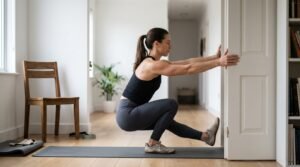
Full pistol squats took me about eight months to achieve. I started with assisted versions, holding onto a door frame for balance, then graduated to box pistol squats (sitting down to a chair and standing on one leg), and eventually hit the full range unassisted. The single-leg strength you build from this movement is incredible.
Pull-Ups and Chin-Ups
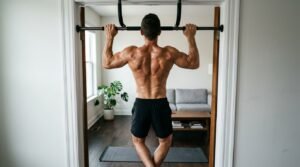
Okay, this one requires a bar, but not a gym. I bought a doorframe pull-up bar from Amazon for about $25. That’s the only piece of “equipment” I own, and honestly, you could also use a playground bar, a tree branch, or a staircase overhang. Pull-ups are the king of upper body exercises and no bodyweight routine is complete without them.
L-Sits
You can do these on the floor with your palms flat beside your hips, lifting your legs straight out in front of you. The core and hip flexor strength this builds is unreal. I started with tucked L-sits (knees bent) and held them for 5 seconds at a time. Now I can hold a full L-sit for about 15 seconds. It’s still brutal every single time.
Burpees (Yes, Really)
I know. Everyone hates burpees. But they’re in my rotation because nothing else combines conditioning, explosiveness, and full-body work the way a burpee does. I do 5 sets of 10 at the end of my Friday sessions, and my heart rate hits levels I never reached on a treadmill.
Common Mistakes I Made (So You Don’t Have To)
I wasted time on a few things early on, and I want to be honest about that.
First, I ignored my back for the first two months. Push-ups were fun and visible. Rows and pull-ups were hard and less glamorous. That imbalance started causing shoulder tightness, and I had to course-correct by adding inverted rows using a sturdy table. If you do nothing else, balance your pushing with pulling.
Second, I skipped warm-ups constantly. Five minutes of joint circles, leg swings, and arm rotations before a session makes a massive difference in how your body feels both during and after the workout. I learned this the hard way after tweaking my shoulder during cold push-ups one winter morning.
Third, I compared my progress to people on social media who had been training for years. That’s a fast track to frustration. Your only competition is last week’s version of yourself.
Tracking Your Progress Without a Gym
One thing gyms make easy is tracking, you just add more weight to the bar. With bodyweight training, progress looks different. I keep a simple notebook (a Notes app on my phone works too) where I log three things after every session: the exercises I did, the reps and sets, and how the session felt on a scale of 1 to 10.
This sounds basic, but looking back through months of entries is incredibly motivating. Seeing “Week 1: 3 knee push-ups, felt like death” next to “Week 20: 15 full push-ups, felt strong” is all the proof you need that legacy fitness workouts without any gym equipment or weights genuinely deliver results.
Frequently Asked Questions
Can you really build muscle with legacy fitness workouts and no weights?
Absolutely. Progressive calisthenics builds real muscle because your muscles don’t know the difference between a barbell and your own bodyweight. What matters is tension, volume, and progressive overload. By advancing to harder variations and manipulating tempo, you give your muscles more than enough stimulus to grow. I’ve added visible size to my chest, shoulders, and legs training this way for over two years.
How long before you see results from equipment-free workouts?
I noticed improved energy and posture within two weeks. Visible muscle definition started showing around the six-week mark, assuming you’re also eating enough protein and sleeping well. Strength gains come faster than aesthetic changes, so pay attention to your reps and hold times increasing. Those are your earliest and most reliable indicators of progress.
Are legacy fitness workouts good for older adults or beginners?
They’re ideal for both. Every movement can be scaled down to match your current ability. A beginner can start with wall push-ups instead of floor push-ups, assisted squats holding a chair, and short plank holds. There’s no minimum fitness level required. You just start where you are and build gradually. I’ve recommended this approach to my parents, both in their 60s, and they’ve stuck with it.
What if I hit a plateau with bodyweight-only training?
Plateaus happen with every training method. When I stall, I change one variable: I slow down the tempo, add a pause at the hardest point of the rep, switch to a harder variation, or increase total volume by adding one more set. You can also try training the same movement more frequently during the week. Plateaus usually break within two to three weeks when you adjust intelligently.
Do I need rest days with bodyweight training?
Yes, always. Your muscles grow during recovery, not during the workout itself. I train three to four days per week and rest the others. On rest days, I walk or do light mobility work, but I don’t do any structured strength training. Skipping rest days is a fast path to overuse injuries and burnout, and I’ve learned that from personal experience more than once.
Conclusion
Legacy fitness workouts without any gym equipment or weights gave me the strongest, most resilient body I’ve ever had, and they cost me almost nothing. The movements are simple, the progressions are endless, and you can do every single one of them in your living room. What’s the one bodyweight exercise you’ve always wanted to master?