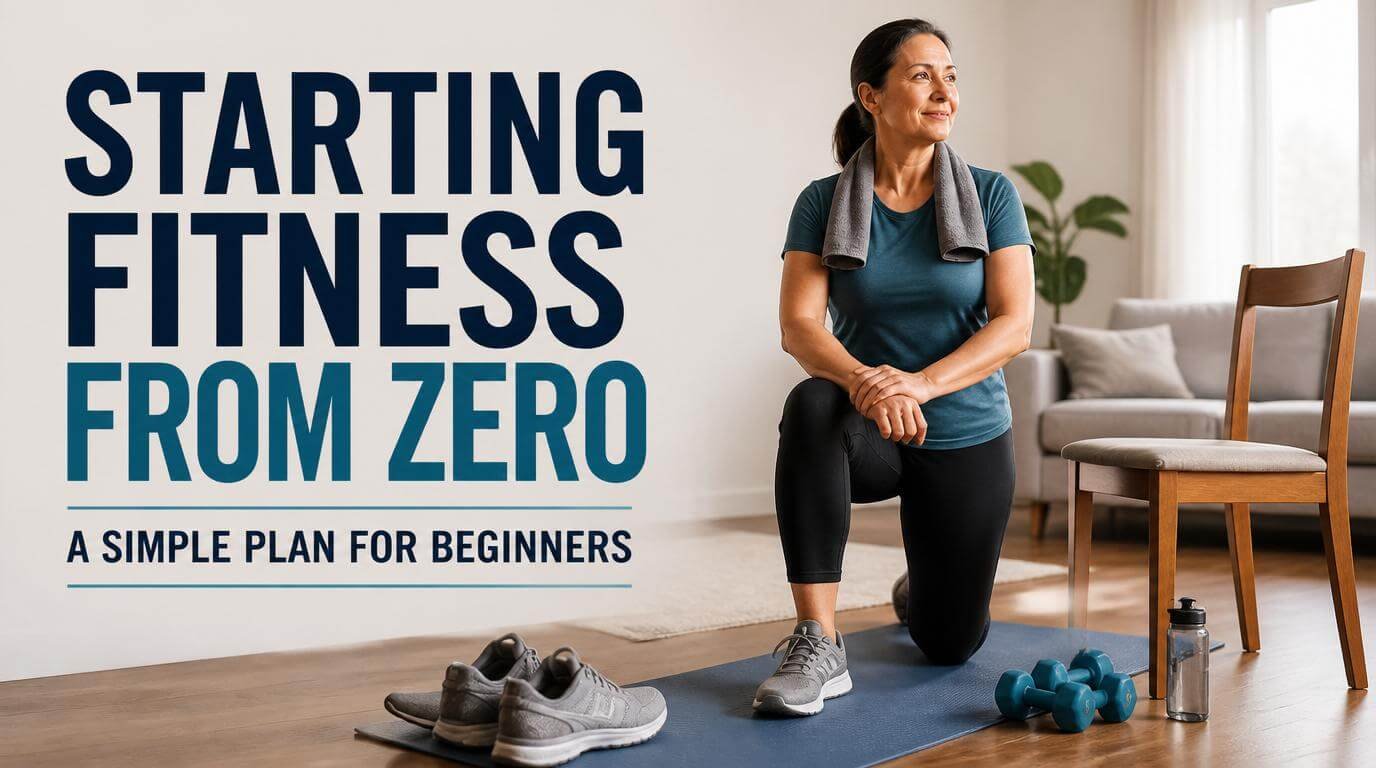
Finding the right fitness plans for first time exercisers after years of inactivity feels overwhelming because every program online assumes you already have a baseline. You don’t. Your baseline is the couch, and that’s completely fine. I sat on mine for eight years before I finally laced up a pair of sneakers that weren’t just for grocery runs. The guilt, the confusion about where to start, the fear of looking ridiculous at a gym, I felt all of it. This guide is what I wish someone had handed me on day one.
Why Starting Over Is Harder Than Starting Fresh
People who have never exercised actually have it easier in one specific way: they don’t carry the mental weight of knowing what they used to be capable of. When you’ve been inactive for years, you remember running a 5K or benching your body weight, and now you get winded walking up a flight of stairs. That gap between memory and reality is brutal.
The physical challenges are real too. After prolonged inactivity, your cardiovascular endurance drops significantly, your muscles lose mass and elasticity, and your joints stiffen up. A 2023 study published in the British Journal of Sports Medicine confirmed that even two weeks of inactivity causes measurable declines in muscle function. Years of it? Your body essentially needs a full reintroduction to movement.
But here’s what nobody tells you: your body also has muscle memory. Those motor patterns you built years ago are still stored in your nervous system. You’ll bounce back faster than a true beginner, even if the first few weeks feel absolutely miserable.
Get Medical Clearance First (Seriously, Don’t Skip This)
I know this sounds like the boring advice your mom would give. I skipped it myself and ended up with knee pain that set me back three weeks. If you haven’t moved your body with any real effort in years, a quick visit to your doctor is non-negotiable.
Tell them you want to start exercising. Ask specifically about any joint issues, blood pressure concerns, or medication interactions. If you’re over 40 or have a history of heart problems, they might want to run a stress test. It takes one appointment. My doctor actually gave me a printout of movement guidelines from the American Heart Association, which became a surprisingly useful starting point.
This step isn’t about getting permission. It’s about knowing your actual limits so you don’t blow past them on day three and end up injured.
The Best Fitness Plans for First Time Exercisers After Years of Inactivity
Not every program works for someone coming back from a long break. Most popular plans like P90X, CrossFit WODs, or even Couch to 5K assume a level of joint readiness and cardiovascular capacity that you probably don’t have yet. Here’s what actually works when you’re truly starting from scratch.
Phase 1: Weeks 1 Through 3, Just Move Daily
Forget intensity. Forget tracking calories burned. Your only job for three weeks is to build the habit of moving every single day.
Walk for 15 to 20 minutes. That’s it. Not power walking, not speed walking, just a normal walk around your neighborhood or on a treadmill if weather is terrible. I started in January in Michigan, so the treadmill at Planet Fitness became my best friend at $10 a month.
Add five minutes of gentle stretching afterward. Focus on your hips, hamstrings, shoulders, and lower back. These are the areas that lock up the most from years of sitting. YouTube channels like Yoga With Adriene have great 5-minute cool-down routines that don’t require any flexibility whatsoever.
The goal here is consistency, not performance. You’re training your brain to expect daily movement.

Phase 2: Weeks 4 Through 6, Introduce Bodyweight Strength
Once walking feels normal and not like a chore, you add two to three days per week of basic bodyweight exercises. Keep walks on the other days.
A simple routine looks like this:
- Wall push-ups, 2 sets of 8
- Bodyweight squats to a chair, 2 sets of 8
- Standing calf raises, 2 sets of 12
- Dead hangs from a pull-up bar, 10 to 15 seconds
- Plank from knees, 15 to 20 seconds
This entire routine takes about 12 minutes. I timed it. The chair squat is especially important because it gives you a safety net. You’re not squatting into the void hoping your knees hold up. You’re sitting down and standing up, which you already do twenty times a day anyway.
If wall push-ups feel too easy, move to incline push-ups on a counter or sturdy table. The progression matters more than the starting point.
Phase 3: Weeks 7 Through 10, Build Real Capacity
Now things get more interesting. Your walks extend to 25 to 35 minutes, and you can start adding brief intervals. Walk at your normal pace for three minutes, then pick it up to a brisk pace for one minute. Repeat.
Strength training moves to three days per week. You can start using light dumbbells, resistance bands, or even gallon water jugs if a gym membership isn’t in the budget. A pair of 10-pound adjustable dumbbells from Amazon or a set of resistance bands from Fit Simplify cost under $25 and cover everything you need.
Your routine expands:
- Dumbbell goblet squats, 3 sets of 10
- Incline push-ups, 3 sets of 8
- Dumbbell rows, 3 sets of 10 per arm
- Glute bridges, 3 sets of 12
- Plank hold, 30 seconds
Rest 60 to 90 seconds between sets. The whole session should take 20 to 25 minutes. You’ll start feeling genuinely different by week 8. I remember the exact moment I realized I’d walked up two flights of stairs without being out of breath. It hit me in the stairwell at work, and I actually stopped and smiled like a weirdo.
Phase 4: Weeks 11 Through 16, Find Your Thing
This is where fitness plans for first time exercisers after years of inactivity stop being generic and start becoming personal. By now, you have a foundation. Your joints are adapted. Your heart doesn’t race from moderate effort. You can actually choose what kind of exercise you enjoy.
Some options to explore:
- Group fitness classes at your local gym (Les Mills Body Pump is fantastic for beginners who want structure)
- Swimming or water aerobics, especially if joints are still cranky
- Cycling on a stationary bike or outdoors
- A beginner running program like None to Run, which is gentler than Couch to 5K
- Yoga or Pilates for mobility and core strength
I personally fell into kettlebell training during this phase and never looked back. A single 20-pound kettlebell and a few YouTube tutorials from Keith Weber gave me a full-body workout I could do in my garage. The point is to experiment until something clicks, because the best program is the one you’ll actually keep doing six months from now.

How to Handle the Mental Game
The physical part is straightforward. Walk, then do some squats, then gradually do more. But the mental side of returning to fitness after years away is where most people quit.
You’ll feel embarrassed. I wore baggy shirts for the first two months at the gym because I didn’t want anyone seeing how out of shape I was. Nobody was looking at me. Everyone was staring at their own reflection or their phone. That realization took weeks to sink in, but it eventually did.
You’ll also have days where you feel zero motivation. I kept a rule that got me through those days: I just had to put my shoes on. That’s it. If I put my shoes on and still didn’t want to work out, I could quit. I never once quit after putting the shoes on. Something about that tiny action flipped a switch.
Tracking progress also helps more than you’d expect. I used a cheap notebook, not an app, and wrote down what I did each day. Seeing four weeks of consistent entries on paper gave me a sense of pride that no fitness tracker notification could match.
Common Mistakes That Stall Your Progress
Doing too much too soon is the most common mistake, and I made it. During week two, I felt great after my walks and decided to throw in some burpees. My lower back was furious with me for a week. Stick to the phases. They exist because your tendons, ligaments, and connective tissue adapt slower than your muscles and your enthusiasm.
Comparing yourself to fitness influencers is another trap. Those people have been training for years with professional coaching, perfect lighting, and sometimes pharmaceutical assistance. Your journey has nothing to do with theirs.
Skipping rest days is also a real problem for people who finally catch the exercise bug. Recovery is when your muscles actually rebuild and grow stronger. Take at least two full rest days per week, especially in the first two months. Light stretching or a gentle walk on rest days is fine, but don’t do another strength session.
Nutrition Doesn’t Need to Be Complicated
You don’t need a meal plan or a macro calculator right now. You need two things: enough protein and enough water.
Aim for roughly 0.7 grams of protein per pound of body weight. For a 180-pound person, that’s about 126 grams per day. Greek yogurt, eggs, chicken thighs, canned tuna, protein powder, these are all simple and affordable sources. I kept a tub of Optimum Nutrition Gold Standard whey in my kitchen and added a scoop to my morning oatmeal. Easy.
Water intake matters because dehydration kills your energy and makes workouts feel twice as hard. Carry a water bottle. Drink before you feel thirsty. That’s the whole strategy.
Everything else, cutting carbs, intermittent fasting, keto, all of that can wait. Right now, just fuel the machine and let the habit of exercise take root before you overhaul your diet too.
Frequently Asked Questions
What’s the safest exercise for someone who hasn’t worked out in years?
Walking is hands down the safest starting point. It’s low impact, requires no equipment, and you can do it anywhere. Start with 15 minutes a day at a comfortable pace and build from there. Your joints, heart, and lungs all benefit without the injury risk that comes with jumping straight into running or lifting weights.
How long before I start seeing results from a beginner fitness plan?
Most people notice improved energy and better sleep within the first two weeks. Visible physical changes usually show up around weeks 6 through 8, depending on consistency and nutrition. Strength gains come faster than you’d think because your nervous system adapts quickly. Don’t rely on the scale alone, though. How your clothes fit tells a more honest story.
Can I follow fitness plans for first time exercisers at home without a gym?
Absolutely. The first six weeks of my plan require nothing but your own body weight and a sturdy chair. After that, a pair of light dumbbells or resistance bands is enough to keep progressing. YouTube has thousands of free follow-along workouts. Channels like HASfit specifically design routines for beginners exercising at home.
How many days per week should a beginner work out?
Start with daily walks, which only take 15 to 20 minutes. Add strength training two to three days per week starting in week four. Always take at least two full rest days from strength work. Your body needs time to recover, especially when it hasn’t been stressed by exercise in a long time. Overdoing it leads to burnout and injury.
What if I feel pain during a workout?
Stop immediately. Muscle soreness the day after a workout is normal and expected. Sharp pain during an exercise is not. It usually means your form is off or you’re pushing a joint beyond its current range. Drop the weight, reduce the range of motion, or skip that exercise entirely. If pain persists for more than a few days, see a physical therapist before continuing.
Is it too late to start exercising in my 40s or 50s?
Not even close. Research consistently shows that people who begin regular exercise later in life still gain significant cardiovascular, metabolic, and mental health benefits. I started at 36 after eight years of doing nothing, and within four months I was in better shape than I’d been at 25. Your body wants to adapt. Give it the chance.
Conclusion
Starting over after years of sitting still is one of the hardest and most rewarding things you can do for yourself. The plan doesn’t need to be fancy, it just needs to be consistent and gradual. Where are you in your own restart, still thinking about it or already a few weeks in?